Top 10 Income Tax Return Filing Mistakes are often related to incorrect income details, TDS, deductions, bank information, capital gains, or tax-regime selection. Even a small mistake while filing an ITR can lead to tax mismatches, delayed refunds, or unnecessary compliance issues.
For Assessment Year (AY) 2026–27, ITR-1 to ITR-7 are available through the Income Tax Department‘s e-Filing portal, depending on the taxpayer’s income sources and eligibility.
The good news is that most ITR filing mistakes are avoidable if you check your information carefully before submitting and verifying your return.
In this guide, we explain 10 common income tax return filing mistakes in 2026, why they happen, and what you can do to avoid them.
Important: This article is for general educational information. Your applicable ITR form, tax regime, deductions, and reporting requirements can depend on your individual circumstances. Always verify the latest information on the official Income Tax Department portal before filing.
1. Choosing the Wrong ITR Form
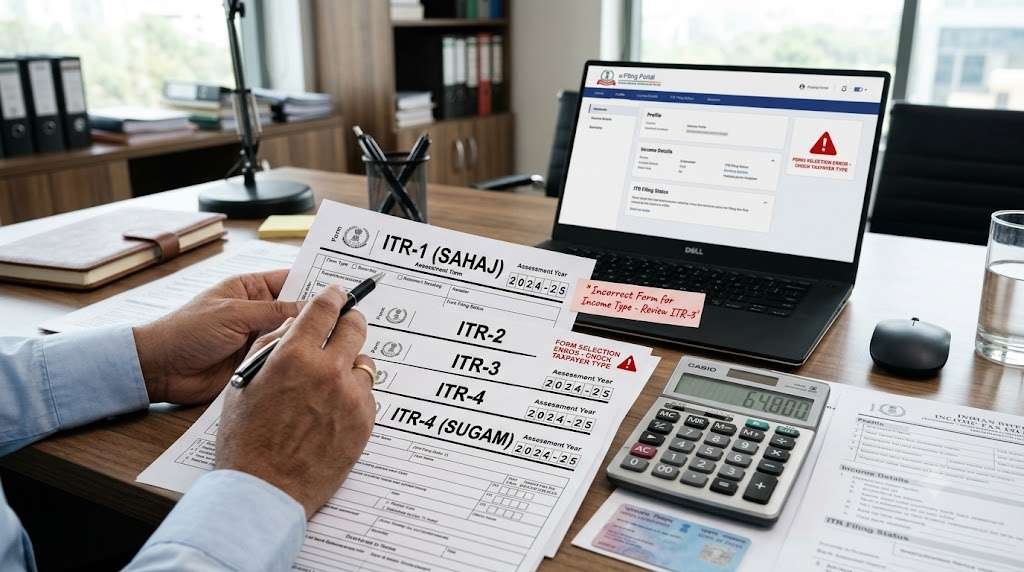
One of the most basic—but important—mistakes is selecting an ITR form that does not match your income sources.
For example, a resident individual may be eligible for ITR-1 only when the prescribed conditions are satisfied. For AY 2026–27, ITR-1 generally applies to eligible resident individuals with total income up to ₹50 lakh from specified sources such as salary or pension, one house property, certain other sources, and eligible capital gains within the prescribed limits.
If your income situation does not meet the conditions for ITR-1, another form such as ITR-2, ITR-3, or ITR-4 may be applicable depending on your circumstances.
Top 10 Income Tax Return Filing Mistakes often begin with selecting an ITR form that does not match the taxpayer’s income sources.
How to avoid this mistake
Before starting your return:
- Check all your sources of income.
- Check whether you have capital gains.
- Check whether you have business or professional income.
- Check whether you have foreign assets or foreign income.
- Check whether you are a director of a company.
- Check the latest eligibility conditions on the Income Tax Department website.
Do not select an ITR form simply because you used the same form last year.
2. Ignoring AIS and TIS Before Filing
Many taxpayers look only at their salary slips or Form 16 and assume that is enough.
It is not.
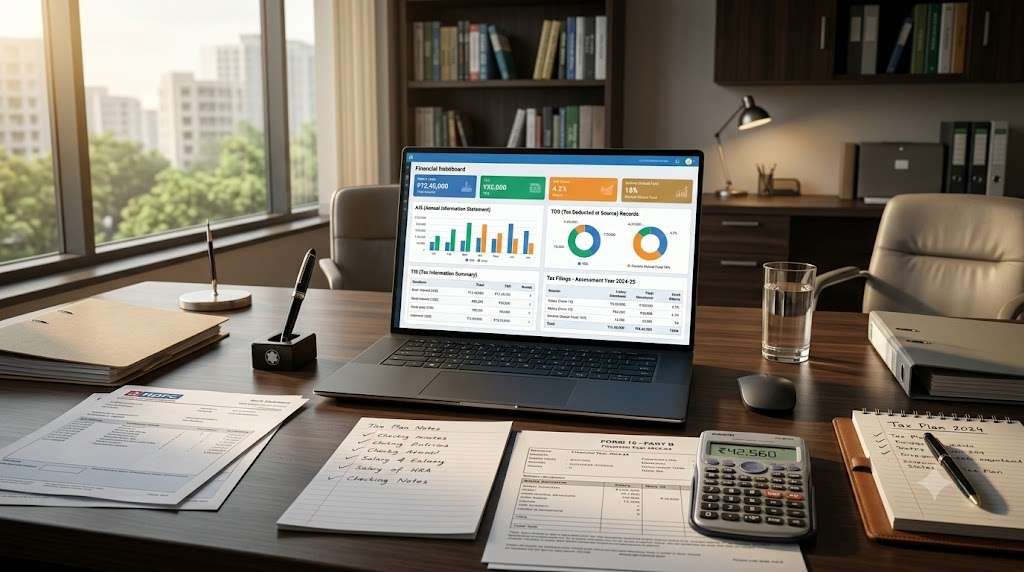
The Annual Information Statement (AIS) contains information reported to the Income Tax Department from various sources. The Taxpayer Information Summary (TIS) provides an aggregated view of information such as salary, interest, dividends and other reported transactions. Information accepted by the taxpayer or confirmed by the reporting source can be used for pre-filling the return, where applicable.
Why this matters
Suppose your bank has reported interest income that you forgot to include in your return. Your return may then differ from the information available with the department.
How to avoid this mistake
Before submitting your ITR:
- Log in to the Income Tax e-Filing portal.
- Open your AIS.
- Review the reported transactions.
- Check the TIS information.
- Compare the information with your own records.
- Report taxable income correctly.
- If you find an incorrect transaction, use the available feedback facility where appropriate.
Do not blindly copy every AIS entry, either. Review whether the information actually belongs to you and whether it has already been included elsewhere.
3. Reporting the Wrong Interest Income
Interest from savings accounts, fixed deposits, recurring deposits and other deposits can easily be overlooked.
This is particularly common when a person has multiple bank accounts or investments with different banks.
A taxpayer may correctly report salary income but forget about:
- Savings account interest
- Fixed deposit interest
- Recurring deposit interest
- Interest on other deposits
- Interest received on tax refunds
- Other taxable interest income
The Income Tax Department’s ITR guidance includes interest and other income sources in the relevant income sections.
How to avoid this mistake
Collect your interest certificates and bank statements before filing.
Then compare the figures with the information available through AIS/TIS and your tax documents.
Even if TDS has already been deducted, the underlying income may still need to be reported correctly.
4. Assuming Form 16 Contains Everything You Need
Form 16 is extremely useful for salaried taxpayers, but it does not necessarily represent every item of income you may need to report.
You could have additional income from:
- Bank interest
- Fixed deposits
- Dividends
- Capital gains
- Rental income
- Freelancing or professional activities
- Other taxable sources
Therefore, filing your ITR by simply copying Form 16 and ignoring other income can create discrepancies.
How to avoid this mistake
Use Form 16 as one source of information—not as your entire tax record.
Also check:
- AIS
- TIS
- Form 26AS
- Bank statements
- Investment statements
- Capital-gain statements
- Other relevant documents
The Income Tax Department explains that Form 26AS primarily contains TDS/TCS-related information, while AIS contains broader information reported about the taxpayer.
5. Choosing the Tax Regime Without Comparing the Numbers
For AY 2026–27, the new tax regime is the default regime for eligible individual taxpayers, while taxpayers who meet the requirements can opt for the old regime.
A common mistake is choosing a tax regime simply because:
“Everyone is using the new regime.”
That is not necessarily the best choice for every taxpayer.
The old and new regimes treat deductions and exemptions differently. The old regime provides for various deductions and exemptions that are generally not available in the same way under the new regime.
Choosing the wrong tax regime is another important issue among the Top 10 Income Tax Return Filing Mistakes taxpayers should review before submitting their return.
How to avoid this mistake
Compare your tax liability under both applicable regimes before finalising your return.
Consider relevant items such as:
- Home-loan interest
- Eligible investments
- Health insurance deductions
- Certain other eligible deductions
- Salary-related exemptions, where applicable
For taxpayers without business or professional income, the tax regime can generally be selected directly while filing the relevant ITR. Taxpayers with business or professional income may have additional requirements, including Form 10-IEA in applicable cases.
6. Claiming Deductions That You Cannot Claim
Another common mistake is claiming every deduction that appears in an old tax-saving checklist without checking whether it is actually available under the selected tax regime.
For example, deductions under various provisions of the Income Tax Act may be relevant under the old regime but not available in the same manner under the default new regime.
How to avoid this mistake
Before entering a deduction, ask:
Is this deduction actually available to me under the tax regime I selected for this return?
Keep supporting documents such as:
- Insurance premium receipts
- Investment proofs
- Home-loan interest certificates
- Eligible education-loan documents
- Other applicable evidence
Do not claim a deduction merely because you claimed it in a previous year.
7. Entering Incorrect TDS or Tax Credit Details
A mismatch between the TDS shown in your return and the information available with the department can create unnecessary problems.
This can happen because:
- PAN details were incorrectly reported by the deductor
- TDS was not reflected correctly
- You entered the wrong amount
- You accidentally entered the same tax credit twice
- A bank or employer later corrected its statement
The Income Tax Department provides mechanisms for dealing with tax-credit mismatches and allows taxpayers to take appropriate corrective action where required.
How to avoid this mistake
Before submitting your return:
- Check Form 26AS.
- Check AIS/TIS.
- Compare TDS certificates with the reported figures.
- Verify the amount of TDS/TCS claimed in the ITR.
- Investigate any significant mismatch before filing.
8. Forgetting Capital Gains From Investments
People sometimes remember their salary and bank interest but forget that selling an investment can create a capital-gain reporting requirement.
This can include transactions involving:
- Shares
- Mutual funds
- Exchange-traded funds
- Certain other securities
- Property and other capital assets, depending on the circumstances
For AY 2026–27, the applicable ITR form and reporting requirements depend on the nature of the income and the taxpayer’s overall circumstances. For example, certain taxpayers with capital gains may not qualify to use ITR-1 and may need another return form.
How to avoid this mistake
Before filing, collect your capital-gain statements from your broker, mutual-fund platform or other relevant provider.
Do not assume that a small sale automatically means it can be ignored.
9. Entering Incorrect Personal or Bank Details
A surprisingly simple mistake can create unnecessary complications: incorrect personal or bank information.
Before submitting your return, carefully check:
- PAN details
- Name
- Address
- Mobile number
- Email address
- Bank account details
- IFSC and other applicable information
- Residential status
- Filing status
The e-Filing system uses pre-filled information from your profile, but taxpayers are still expected to review the information and make necessary corrections. The Income Tax Department’s ITR user manual specifically instructs taxpayers to validate pre-filled information and update it where necessary.
Why bank details matter
If you are expecting a refund, incorrect bank information can create avoidable problems.
So don’t rush through the personal-information section simply because some fields are pre-filled.
10. Filing the Return but Forgetting to E-Verify It
Submitting the ITR is not the final step.
You also need to complete the applicable verification process.
The Income Tax Department provides e-Verification facilities for filed returns. A return that has been submitted but not properly verified can create a serious compliance issue.
How to avoid this mistake
After submitting your ITR:
- Check the filing status.
- Complete e-Verification using an available method.
- Save the acknowledgement.
- Keep the relevant records safely.
Do not close the browser immediately after clicking “Submit” and assume everything is finished.
Bonus Mistake: Filing With Pre-Filled Data Without Checking It
Pre-filled information makes ITR filing easier, but pre-filled does not mean automatically correct.
The Income Tax Department’s AY 2026–27 ITR guidance specifically instructs taxpayers to review pre-filled information and edit it where necessary.
Before final submission, compare the return with your own documents.
A few minutes of checking can prevent much bigger problems later.
ITR Filing Mistakes Checklist for 2026
Reviewing these Top 10 Income Tax Return Filing Mistakes can help you identify common errors before submitting your ITR.
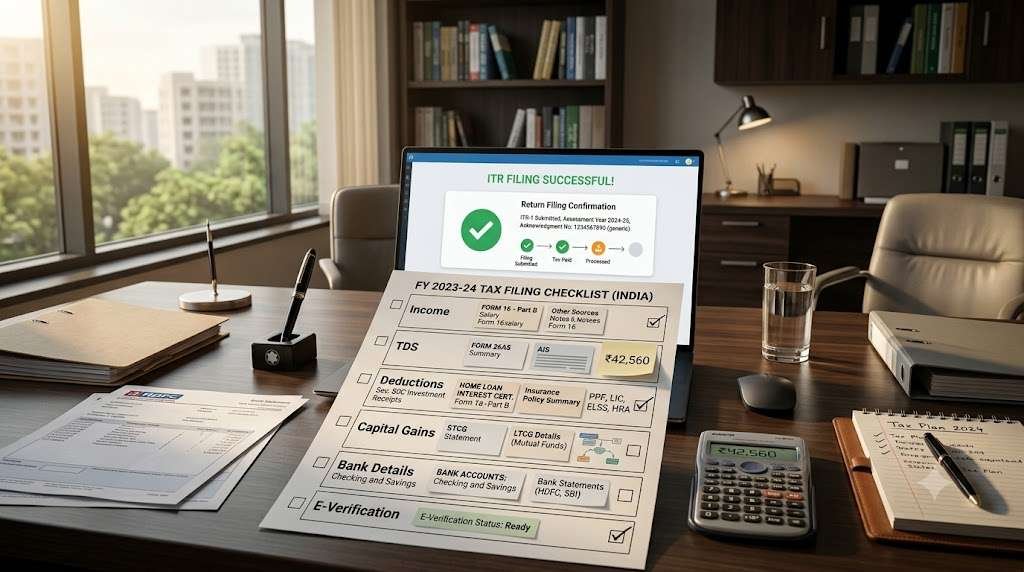
Before you click the final submit button, check these points:
- Correct ITR form selected
- Salary/pension income checked
- Bank interest included
- FD/RD interest checked
- AIS reviewed
- TIS reviewed
- Form 26AS checked
- TDS/TCS credits verified
- Capital gains checked
- Deductions verified under the selected tax regime
- Tax regime compared before final selection
- Personal information checked
- Bank details checked
- Tax payable/refund amount reviewed
- Return submitted successfully
- ITR e-Verified
- Acknowledgement saved
Final Takeaway
Avoiding the Top 10 Income Tax Return Filing Mistakes can make the ITR filing process more accurate and help reduce avoidable discrepancies.
Filing an Income Tax Return is not simply a matter of filling in numbers and clicking submit.
The most common mistakes happen when taxpayers:
- Select the wrong ITR form
- Ignore AIS/TIS
- Forget interest income
- Rely only on Form 16
- Choose a tax regime without comparing the tax impact
- Claim deductions without checking eligibility
- Ignore TDS mismatches
- Forget capital gains
- Enter incorrect personal or bank details
- Submit the return but fail to complete verification
For AY 2026–27, the Income Tax Department has made the relevant ITR forms available on its e-Filing portal, so taxpayers should use the latest applicable forms and official guidance when preparing their return.
The safest approach is simple: collect your documents, review AIS/TIS and tax credits, select the correct ITR form, verify every important figure, and complete e-Verification after submission.
The official tax portal provides access to AIS and related information for taxpayers. (incometax.gov.in)
Frequently Asked Questions
1. What is the most common ITR filing mistake?
One common mistake is filing without checking all sources of income. Salary alone may not represent your complete taxable income, especially if you also earn bank interest, dividends, capital gains, rental income or other income.
2. Should I check AIS before filing my ITR?
Yes. AIS contains information reported from various sources and TIS provides an aggregated summary. Reviewing them before filing can help identify missing or incorrect income information.
3. Is the new tax regime mandatory for AY 2026–27?
The new tax regime is the default regime for eligible individual taxpayers, but eligible taxpayers can opt for the old regime subject to the applicable rules and procedures.
4. Can I claim all deductions under the new tax regime?
No. Deductions and exemptions available under the old and new regimes are not identical. Always check whether a particular deduction is available under the regime you choose.
5. What should I do if I discover a mistake after filing?
Depending on the status and circumstances of your return, you may be able to file a revised return or use another correction mechanism provided by the Income Tax Department. For AY 2026–27, the department states that the revised-return window extends to the end of the relevant assessment year, subject to applicable conditions and fees.
6. Is Form 26AS the same as AIS?
No. Form 26AS primarily contains TDS/TCS-related information, while AIS provides broader reported information and includes a facility for taxpayer feedback.
7. Do I need to verify my ITR after submitting it?
Yes. Completing the applicable verification process is an important final step after submitting your return.
Disclaimer: This article provides general educational information and should not be treated as personalised tax or financial advice. Income-tax rules, forms, procedures and deadlines can change. Before filing, verify the latest applicable requirements on the official Income Tax Department e-Filing portal or consult a qualified tax professional.