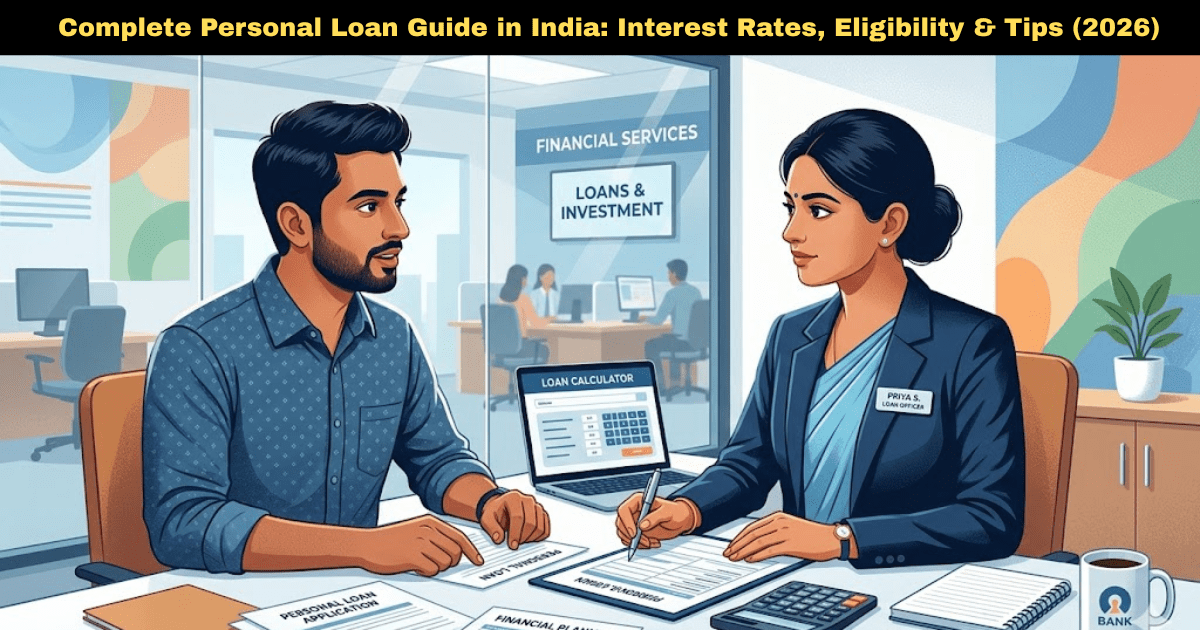
Complete Personal Loan Guide in India 2024: Best Banks, Interest Rates & Eligibility
Personal loans serve as essential financial instruments for millions of Indians managing urgent expenses and achieving their financial goals. Whether you require funds for medical emergencies, home renovations, education expenses, or travel plans, personal loans deliver quick financial assistance without demanding collateral security.
This comprehensive Personal Loan Guide in India covers everything you need to understand about personal loans, including current interest rates, eligibility requirements, necessary documentation, and expert tips to select the optimal loan option for your needs.
Understanding personal loan mechanics empowers you to make informed financial decisions while avoiding unnecessary debt traps.
If you want to understand how credit works in banking, you can also read our guide on what is credit card and how it affects your financial planning.
If you’re planning your finances in 2026, you should also check the latest FD interest rates in India to understand safe investment options.

What Defines a Personal Loan?
A personal loan represents an unsecured credit facility that banks and non-banking financial companies (NBFCs) provide to individuals based on their income stability, credit score, and repayment capability. Unlike secured loans such as home loans or vehicle loans, personal loans require no collateral backing.
You can utilize personal loans for multiple purposes including:
- Medical treatment expenses
- Wedding celebrations
- Travel and vacation costs
- Educational requirements
- Debt consolidation
- Home improvement projects
Most banking institutions across India offer personal loans with flexible repayment periods extending from 12 months to 60 months, providing borrowers with convenient repayment options.
Personal Loan Interest Rates and Calculation Methods
Interest rates on personal loans fluctuate based on several determining factors including the lending institution, borrower’s credit profile, and income stability.
Currently, personal loan interest rates in India typically range between 8.99% to 24% per annum.
Key Factors Influencing Interest Rates: Personal Loan Guide in India
- Credit Score Performance: Higher CIBIL scores secure lower interest rates
- Income Consistency: Stable employment and income sources
- Employer Reputation: Working with reputed companies improves rates
- Existing Debt Obligations: Lower debt-to-income ratios fetch better rates
- Loan Amount Requested: Higher amounts may qualify for reduced rates
The Reserve Bank of India (RBI) mandates that all lending institutions follow responsible lending practices while processing personal loan applications.
Personal Loan Eligibility Criteria in India
This Personal Loan Guide in India outlines the standard eligibility parameters that banks evaluate during the application assessment process.
Age Requirements
- Minimum age: 21 years
- Maximum age: 60 years (may vary by lender)
Income Specifications
- Salaried individuals: Minimum monthly income of ₹15,000-₹25,000
- Self-employed professionals: Annual income of ₹2-3 lakhs minimum
Credit Score Standards
- CIBIL score above 700 significantly improves approval chances
- Scores between 650-700 may qualify with higher interest rates
- Scores below 650 face higher rejection probability
Employment Categories
- Salaried employees with permanent positions
- Self-employed professionals and business owners
- Freelancers with consistent income proof
Meeting these eligibility standards enhances your chances of securing personal loans with favorable terms and conditions.
Essential Documents for Personal Loan Applications
When applying for personal loans in India, prepare these mandatory documents:
Identity Verification
- Aadhaar Card
- PAN Card
- Passport
- Voter ID Card
Address Confirmation
- Utility bills (electricity, water, gas)
- Bank statements
- Rental agreements
- Property documents
Income Documentation
For Salaried Individuals:
- Latest 3 months’ salary slips
- Form 16 or IT returns
- Bank statements (6 months)
- Employment certificate
For Self-Employed Applicants:
- ITR for last 2-3 years
- Business registration documents
- Bank statements (12 months)
- Profit & Loss statements
- Balance sheet
Additional Requirements
- Passport-size photographs
- Employment proof letter
- Educational certificates (if required)
Submitting accurate and complete documentation accelerates the loan approval timeline significantly.
You can also learn more about how personal loans work from financial education resources like Investopedia.
Best Banks for Personal Loans in India
Multiple banking institutions and NBFCs compete in India’s personal loan market, offering diverse interest rates, processing fees, and repayment terms.
Top Public Sector Banks
State Bank of India (SBI)
- Interest rates: 10.70% – 15.20% p.a.
- Loan amount: Up to ₹20 lakhs
- Processing fee: 0.35% + GST
Bank of Baroda
- Interest rates: 11.15% – 18.35% p.a.
- Loan amount: Up to ₹10 lakhs
- Processing fee: 2% + GST
Leading Private Banks
HDFC Bank
- Interest rates: 10.75% – 24% p.a.
- Loan amount: Up to ₹40 lakhs
- Processing fee: Up to 2.5% + GST
ICICI Bank
- Interest rates: 10.75% – 19% p.a.
- Loan amount: Up to ₹50 lakhs
- Processing fee: Up to 2.25% + GST
Axis Bank
- Interest rates: 10.75% – 22% p.a.
- Loan amount: Up to ₹40 lakhs
- Processing fee: Up to 2% + GST
Notable NBFCs
Bajaj Finserv
- Interest rates: 11% – 25% p.a.
- Loan amount: Up to ₹35 lakhs
- Quick approval process
Tata Capital
- Interest rates: 11.99% – 20% p.a.
- Loan amount: Up to ₹25 lakhs
- Minimal documentation
This analysis of Best Banks for Personal Loans in India helps borrowers identify suitable lenders matching their specific requirements and financial profiles.
Read More:
Expert Tips for Choosing the Right Personal Loan
This Personal Loan Guide in India provides strategic recommendations for selecting optimal personal loan options:
Compare Interest Rates Thoroughly
Research and compare interest rates across multiple lenders. Even a 1-2% difference significantly impacts your total repayment amount over the loan tenure.
Different banks offer varying interest rates, processing fees, and repayment terms, so comparing options is important.
We have also covered the best FD interest rates in India 2026 with updated bank data and returns.
👉 Proper financial planning can help you avoid unnecessary loans — check our personal finance guide for beginners.
Evaluate Processing Fees and Charges
Banks typically charge processing fees ranging from 0.5% to 3% of the loan amount. Additionally, consider:
- Documentation charges
- Late payment penalties
- Foreclosure charges
- EMI bounce charges
Analyze Repayment Tenure Options
Choose repayment periods that balance affordable EMIs with total interest costs:
- Shorter tenures: Higher EMIs but lower total interest
- Longer tenures: Lower EMIs but higher total interest burden
Check Prepayment and Foreclosure Terms
Some lenders impose penalties for early loan closure, while others offer flexible prepayment options without additional charges.
Review Loan Approval Speed
If you need funds urgently, prioritize lenders offering quick approval and disbursement timelines, typically ranging from 24 hours to 5 working days.
Understanding Personal Loan Risks and Precautions
While personal loans provide convenient access to funds, borrowers must understand associated risks:
High Interest Rate Impact
Personal loans carry higher interest rates compared to secured loans, making them expensive borrowing options for long-term financial needs.
Debt Burden Accumulation
Multiple personal loans can create overwhelming debt burdens, affecting your financial stability and credit score performance.
Credit Score Implications
Late payments or defaults on personal loans negatively impact your CIBIL score, restricting future borrowing opportunities.
EMI Affordability Challenges
High EMI commitments may strain your monthly budget, leading to financial stress and potential payment defaults.
Personal Loan vs Credit Card Comparison
Understanding the differences between personal loans and credit card advances helps you choose appropriate borrowing methods:
| Feature | Personal Loan | Credit Card Loan |
|---|---|---|
| Interest Rates | 10.99% – 24% p.a. | 24% – 48% p.a. |
| Loan Amount | ₹50,000 – ₹50 lakhs | Credit limit dependent |
| Repayment Period | 12-60 months | Revolving credit |
| Processing Time | 1-5 days | Instant access |
| Documentation | Extensive | Minimal |
Personal loans offer structured repayment schedules with lower interest rates, while credit cards provide immediate access to funds with higher interest costs.
Before applying for a personal loan, many borrowers also compare it with other borrowing options such as credit cards to understand which option suits their financial needs better. Read this: Comparing Credit Card Vs Personal Loan : Latest Update 2026
Many borrowers also confuse loans with credit card payments. You can learn more in our guide on credit card minimum due.
Smart Alternatives to Personal Loans
Before committing to personal loans, consider these alternative financing options:
Gold Loans
- Lower interest rates (8% – 12% p.a.)
- Quick processing and approval
- Minimal documentation requirements
Loans Against Fixed Deposits
- Interest rates 1-2% above FD rates
- No impact on credit score
- Immediate approval process
Peer-to-Peer (P2P) Lending
- Competitive interest rates
- Flexible terms and conditions
- Online application processz
Borrowers should take personal loans only when necessary and ensure timely repayments.
If you’re planning your finances in 2026, you should also check the latest FD interest rates in India to understand safe investment options.
👉 Instead of Personal loans, options like gold loans can sometimes offer lower interest rates — explore full gold loan details here.
Conclusion
Personal loans serve as valuable financial tools when used responsibly and strategically. This comprehensive Personal Loan Guide in India equips you with essential knowledge about interest rates, eligibility criteria, documentation requirements, and selection strategies.
By comparing offerings from the Best Banks for Personal Loans in India and understanding loan terms thoroughly, you can make informed borrowing decisions that align with your financial capabilities and goals.
Remember to evaluate your repayment capacity honestly, compare multiple lenders systematically, and choose loan terms that support your long-term financial health rather than creating unsustainable debt burdens.
👉 Proper financial planning can help you avoid unnecessary loans — check our personal finance guide for beginners.
Frequently Asked Questions
What defines a personal loan in India?
A personal loan represents an unsecured credit facility that banks and NBFCs provide to individuals without requiring collateral security, based on income, credit score, and repayment capacity.
What minimum credit score do banks require for personal loans?
Most banks prefer CIBIL scores of 700 or higher for personal loan approvals, though some lenders may consider applications with scores between 650-700 at higher interest rates.
How long does personal loan approval typically take?
Personal loan approval and disbursement usually takes between 24 hours to 5 working days, depending on the lender’s internal processes and document verification requirements.
Can I prepay my personal loan without penalties?
Many banks allow personal loan prepayment after completing 6-12 EMI payments, though some may charge prepayment penalties ranging from 2-5% of the outstanding principal amount.
What maximum amount can I borrow through personal loans?
Personal loan amounts typically range from ₹50,000 to ₹50 lakhs, depending on your income level, credit score, and the lending institution’s policies.
7 thoughts on “Complete Personal Loan Guide in India: Interest Rates, Eligibility & Tips (2026)”