🧾 Introduction
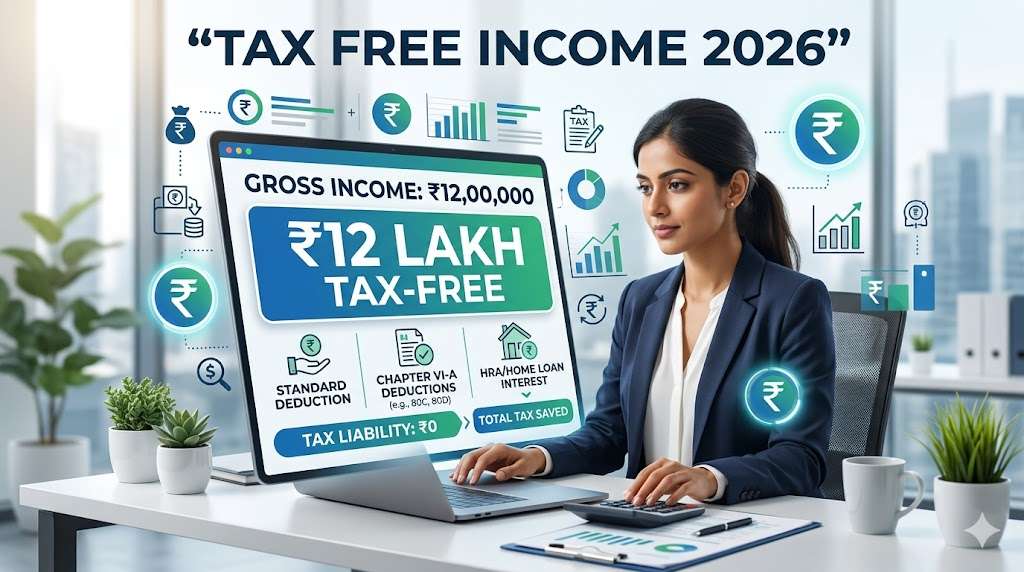
The Tax Free Income Limit Update 2026 has brought major changes for Indian taxpayers, especially under the new tax regime where income up to ₹12 lakh can be effectively tax-free.
Tax Free Income Limit in 2026 has become one of the most discussed financial topics in India. With recent changes in the tax structure and rebate benefits, many taxpayers are now able to enjoy zero tax liability on higher income levels.
In this guide, we will explain the latest income tax limits, new vs old regime comparison, and what it means for salaried individuals and investors in India.
The Tax Free Income Limit Update 2026 has introduced major changes in income tax slabs, which are explained below in detail.
📊 Tax Free Income Limit India 2026 (Latest Table)
| Category | Tax-Free Income Limit | Details |
|---|---|---|
| New Tax Regime (Basic) | ₹4,00,000 | No tax up to ₹4 lakh slab |
| New Regime (After Rebate u/s 87A) | ₹12,00,000 | Zero tax due to rebate |
| Salaried Individuals | ₹12,75,000 | ₹75,000 standard deduction included |
| Old Tax Regime (Basic) | ₹2,50,000 | No change in slabs |
| Old Regime (After Deductions) | ₹5,00,000 | Tax-free with rebate |
| Senior Citizens | ₹3,00,000 | Higher exemption limit |
| Super Senior (80+) | ₹5,00,000 | No tax up to ₹5 lakh |
🔥 Key Highlights of Tax Changes in 2026
- Income up to ₹12 lakh is effectively tax-free under the new regime
- Salaried individuals can enjoy ₹12.75 lakh tax-free income
- Standard deduction increased to ₹75,000
- New tax regime is now the default system
- Old regime remains unchanged but offers deductions
One of the biggest advantages of the Tax Free Income Limit Update 2026 is the increase in rebate limits.
🧠 New Tax Regime vs Old Tax Regime
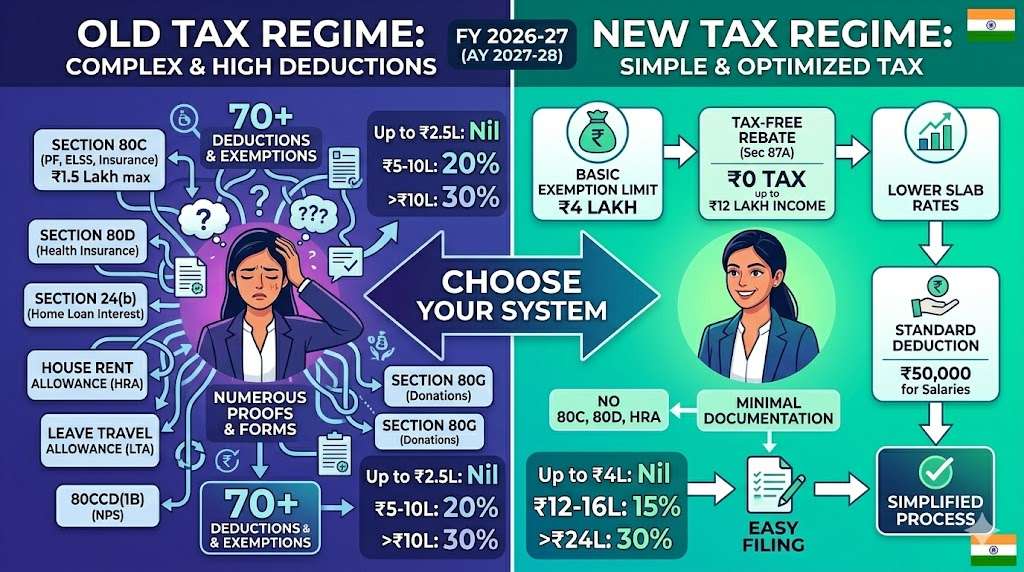
🟢 New Tax Regime
- Lower tax rates
- No need for multiple deductions
- Best for individuals with fewer investments
🔵 Old Tax Regime
- Higher tax rates
- Allows deductions (80C, 80D, etc.)
- Better for those with tax-saving investments
💡 Example (Easy Understanding)
👉 If your annual income is ₹12 lakh:
- Under the new regime → Tax = ₹0
- Under the old regime → Tax may apply unless deductions are used
👉 If your salary is ₹12.75 lakh:
- Standard deduction reduces taxable income
- Final tax liability → ZERO
📈 Why This Update is Important
The increase in the tax free income limit in 2026 benefits:
- Middle-class salaried individuals
- First-time taxpayers
- Investors looking for simplified tax planning
This change also encourages more people to shift to the new tax regime.
Perfect 👍 — ये section तुम अपने article में add करो (SEO + readability boost 🔥)
📊 Impact on Different Income Groups and Tax Slabs
The tax free income limit in 2026 has significantly impacted different income groups in India. The new tax regime especially benefits middle-income earners by reducing tax burden and simplifying calculations.
- Low-income group (₹0–₹4 lakh): Completely tax-free under the new regime
- Middle-income group (₹4–₹12 lakh): Major benefit due to rebate under Section 87A
- Upper middle-income (₹12–₹15 lakh): Reduced tax compared to previous years
- High-income group (₹15 lakh+): Limited benefit, but simplified tax structure
👉 Overall, the new tax regime shifts focus from deductions to lower tax rates and simplicity
💼 Salaried Employees Benefits
Salaried individuals are among the biggest beneficiaries of the tax free income limit update in 2026. With the increase in standard deduction and rebate, their effective tax liability has reduced significantly.
- Standard deduction increased to ₹75,000
- Tax-free income up to ₹12.75 lakh possible
- No need to invest in tax-saving instruments compulsorily
- Simplified filing process
👉 This allows salaried employees to retain more disposable income and improve savings
🏢 Business Owner Considerations
For business owners and self-employed individuals, the new tax regime offers flexibility but requires careful planning.
- No deductions available → need better profit planning
- Suitable for those with fewer expenses or deductions
- Cash flow management becomes more important
- Option to choose between old and new regime annually
👉 Business owners should evaluate both regimes before filing returns to maximize tax efficiency
📌 Additional Tax Deductions and Exemptions: Tax Free Income Limit Update
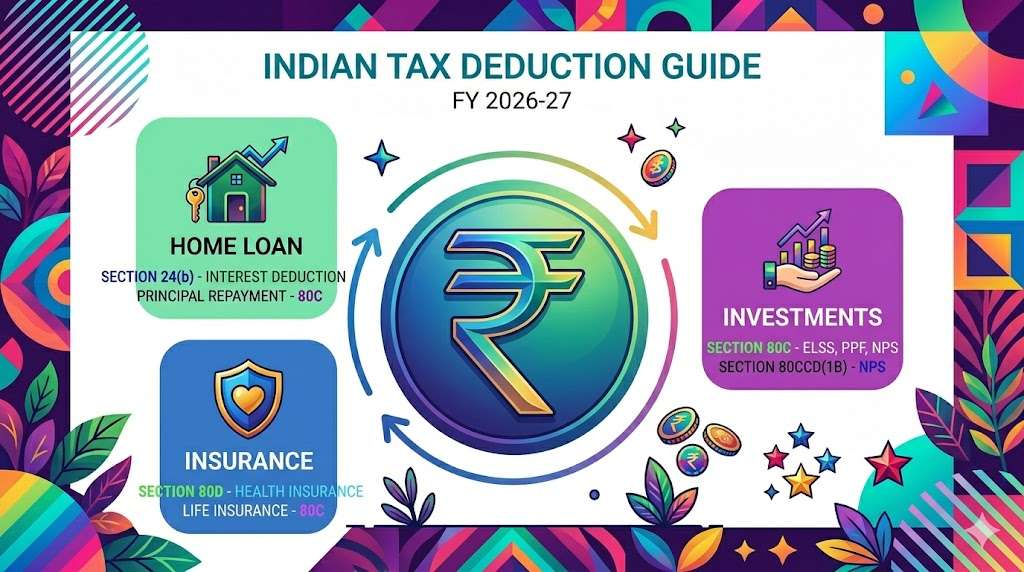
While the tax free income limit update in 2026 has made the new tax regime more attractive, deductions and exemptions still play a crucial role—especially under the old tax regime. Taxpayers who actively invest and plan can reduce their taxable income significantly using these provisions.
💰 Section 80C Investments
Section 80C remains one of the most popular ways to save tax in India. Under the old tax regime, you can claim deductions up to ₹1.5 lakh annually through eligible investments.
✔ Common 80C Options:
- Public Provident Fund (PPF)
- Employees’ Provident Fund (EPF)
- Equity Linked Savings Scheme (ELSS)
- Life Insurance Premium
- Tax-saving Fixed Deposits
👉 These investments not only reduce tax but also help in long-term wealth creation
🏥 Health Insurance Premium Benefits
Health insurance is another important deduction available under Section 80D. It allows taxpayers to save tax while securing their medical expenses.
✔ Deduction Limits:
- ₹25,000 → for self & family
- ₹50,000 → for senior citizens
- Additional ₹25,000–₹50,000 for parents
👉 This benefit is especially useful in today’s rising healthcare cost environment
🏠 Housing Loan Interest Deductions
Home loan borrowers can also take advantage of tax deductions under Section 24(b).
✔ Key Benefits:
- Up to ₹2 lakh deduction on interest payment
- Additional benefits under Section 80EE / 80EEA (if applicable)
- Encourages home ownership
👉 This significantly reduces taxable income for homeowners
🔥 Important Note (VERY IMPORTANT)
👉 Under the new tax regime (2026):
❌ Most deductions (80C, 80D, housing loan) are NOT available
👉 Under the old tax regime:
✔ All deductions are applicable
💡 Smart Strategy for Taxpayers
- Choose new regime → if you want simplicity
- Choose old regime → if you invest heavily in tax-saving instruments
👉 Always calculate both options before filing your income tax return
📚 Recommended Reading (Smart Money Guides)
Want to take better control of your finances in 2026? Explore these handpicked guides designed to help you make smarter decisions, save more, and grow your wealth faster:
👉 💡 Start with the basics:
🔗 Personal Finance Planning Guide
Learn how to manage your money, create a budget, and build a strong financial foundation.
👉 📈 Grow your wealth wisely:
🔗 Best Investment Options in India
Discover top investment opportunities to maximize your returns in 2026.
👉 💳 Use credit smartly:
🔗 Best Credit Cards Full Guide
Compare top credit cards and choose the best one based on your needs.
👉 💰 Need quick funds?
🔗 Best Personal Loan Options in India
Find the best loan options with low interest rates and easy approval.
👉 🟡 Unlock gold value:
🔗 All Types of Gold Loan Options in India
Understand different gold loan types and how to use them effectively.
External Resources
For official updates, visit:
- Income Tax Department India → https://www.incometax.gov.in
- Reserve Bank of India → https://www.rbi.org.in
🌍 Global Perspective
While this update is specific to India, many countries are also simplifying tax structures to reduce compliance burden and improve transparency. The trend toward simplified taxation is becoming global.
❓ FAQs
1. What is the tax free income limit 2026 in India?
The tax free income limit in 2026 is up to ₹12 lakh under the new tax regime after rebate benefits.
2. Is ₹12.75 lakh income tax-free for salaried individuals?
Yes, salaried individuals can enjoy tax-free income up to ₹12.75 lakh due to the standard deduction.
3. Which tax regime is better in 2026?
The new tax regime is better for those who do not claim deductions, while the old regime suits investors.
4. Has the old tax regime changed in 2026?
No, the old tax regime remains unchanged.
5. Should I switch to the new tax regime?
If you prefer simplicity and fewer deductions, the new tax regime is a better option.
🏁 Conclusion
The Tax Free Income Limit Update 2026 is a major relief for Indian taxpayers. With higher rebate limits and simplified taxation, individuals can now save more and plan better.
If used wisely, this update can significantly improve your financial health and long-term wealth creation strategy.